
Tissue Repair & Recovery
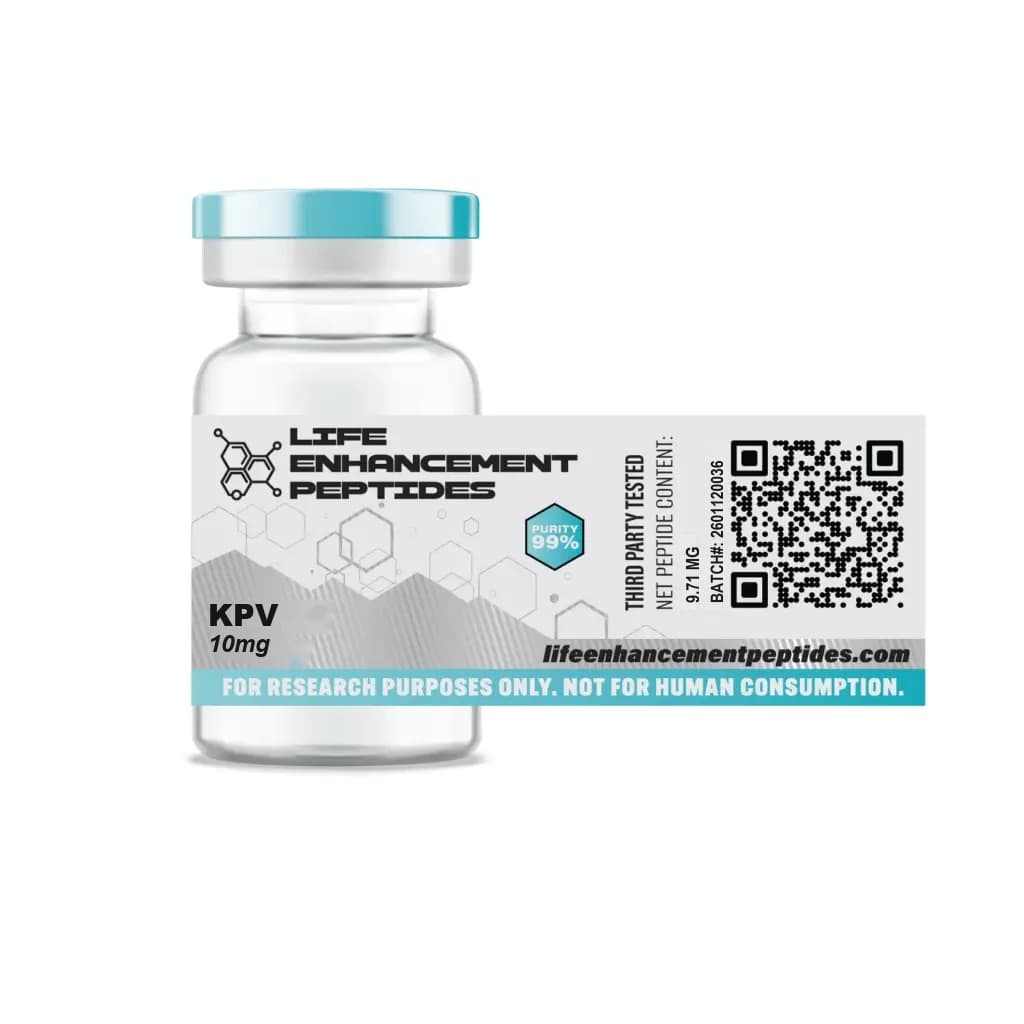
KPV — 10mg
$54
The C-terminal tripeptide fragment of alpha-melanocyte-stimulating hormone, studied for potent anti-inflammatory activity in gut and mucosal tissue without the pigmentation effects of the parent hormone.
 Tissue Repair & Recovery
Overview
KPV (Lysine-Proline-Valine) is the C-terminal tripeptide of alpha-melanocyte-stimulating hormone (α-MSH). While the full 13-amino acid α-MSH acts through melanocortin receptors to drive pigmentation, appetite regulation, and peripheral anti-inflammatory effects, the KPV fragment isolates the anti-inflammatory activity through a melanocortin-receptor-independent pathway. This mechanistic separation is what makes KPV attractive as a research compound: the immunomodulatory effects of α-MSH without the off-target receptor engagement.
At the cellular level, KPV suppresses NF-κB signaling — the master transcriptional regulator of inflammatory gene expression — and reduces pro-inflammatory cytokine output including TNF-α, IL-1β, and IL-6. The tripeptide enters cells via the PepT1 transporter, which is highly expressed in intestinal epithelium. This tissue-specific uptake has positioned KPV as a leading candidate for research into inflammatory bowel disease, where systemic anti-inflammatories often produce acceptable efficacy only at doses that drive immunosuppressive side effects.
Animal models of dextran sodium sulfate (DSS)-induced colitis have demonstrated that oral KPV reduces colonic inflammation, preserves crypt architecture, and restores tight junction integrity at doses orders of magnitude below systemic α-MSH equivalents. Parallel research has examined topical and mucosal applications for psoriasis and allergic contact dermatitis. Its small size and peptidase resistance (conferred by the proline residue) make it stable across multiple routes of administration — a practical advantage that has expanded its use in formulation research.
Mechanism of Action
Suppresses NF-κB nuclear translocation to reduce pro-inflammatory cytokine transcription (TNF-α, IL-1β, IL-6); enters intestinal epithelial cells via the PepT1 di/tri-peptide transporter for tissue-targeted uptake.
Research Applications
Areas of peer-reviewed scientific inquiry where this compound has appeared.
- Inflammatory bowel disease and colitis models
- Mucosal immunity and gut barrier function
- Psoriasis and inflammatory skin research
- Allergic contact dermatitis
- Tissue-targeted anti-inflammatory delivery
Key Findings from the Literature
- 01Reduces colonic inflammation in DSS-induced colitis at sub-systemic doses
- 02Melanocortin-receptor-independent mechanism — no pigmentation or appetite effects
- 03Peptidase-resistant structure enables oral, topical, and mucosal delivery
- 04PepT1-mediated intestinal uptake provides natural gut-targeted activity
Certificates of Analysis1
Independent third-party lab reports for this peptide. Each CoA can be verified against its accession number at the testing lab.
1 independent test by Freedom Diagnostics Testing
| Test | Result |
|---|---|
| Purity (HPLC) | 99.934% |
| Identity (MS) | Pass |
| Endotoxins (LAL) | Pass |
Lab: Freedom Diagnostics Testing
Accession: 2601120036 / 2601120037
Reports are verifiable against the issuing lab using the accession or batch identifier above.
Related Peptides
Other compounds in the tissue repair & recovery category.
 tissue repair
BPC-157
10mg
A 15-amino acid pentadecapeptide derived from human gastric juice, studied for its remarkable capacity to accelerate healing across musculoskeletal, gastrointestinal, and neural tissues.
 tissue repair
BPC-157
20mg
The higher-dose format of BPC-157 for research protocols requiring extended treatment windows or higher per-administration quantities of this gastric-derived pentadecapeptide.
 tissue repair
TB-500
10mg
A synthetic fragment of Thymosin Beta-4 corresponding to the actin-binding domain, extensively studied for its role in cardiac angiogenesis, soft tissue healing, and corneal regeneration.