
Metabolic Research
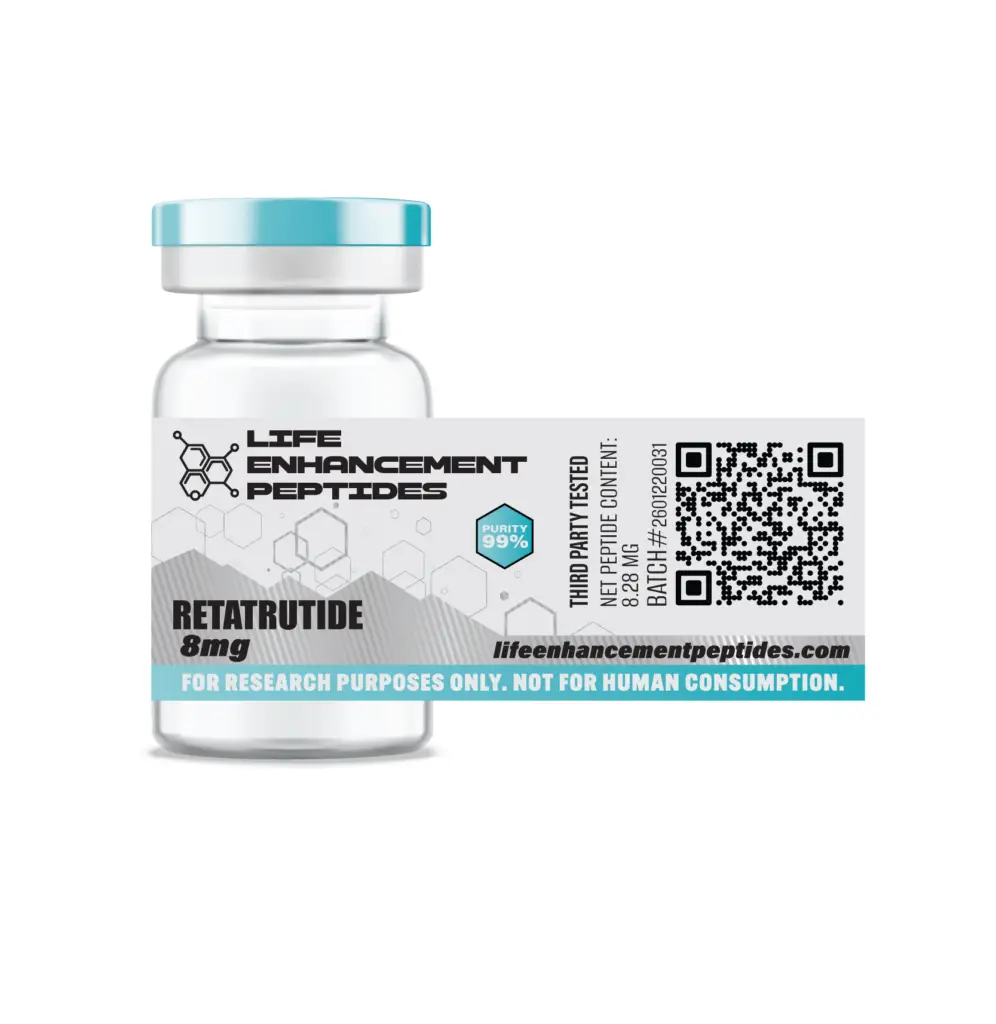
Retatrutide — 8mg
$89
Eli Lilly's investigational triple receptor agonist targeting GLP-1, GIP, and glucagon receptors simultaneously — demonstrating up to 28.7% weight loss in Phase 3 trials, the highest of any obesity pharmacotherapy to date.
 Metabolic Research
Overview
Retatrutide is a 39-amino acid synthetic peptide developed by Eli Lilly that functions as a balanced agonist at all three incretin and glucagon family receptors: GLP-1R, GIPR, and GCGR. This triple-agonist profile is its defining pharmacological feature. While GLP-1 receptor agonists like semaglutide address appetite suppression, and dual GLP-1/GIP agents like tirzepatide add insulin sensitization, retatrutide adds a third mechanism — glucagon receptor activation that directly stimulates hepatic lipolysis and increases energy expenditure. The result is a compound that simultaneously reduces caloric intake, improves insulin sensitivity, and accelerates fat oxidation.
The peptide is structured with a C20 fatty diacid modification at Lys²⁰, enabling once-weekly subcutaneous dosing through albumin binding. Phase 2 dose-escalation data showed mean weight loss of 24.2% at 48 weeks at the highest dose tested — substantially exceeding semaglutide's 14.9% and approaching tirzepatide's 22.5% in comparable timeframes. Phase 3 TRIUMPH-4 data extended this to 28.7% at 68 weeks, establishing a new clinical benchmark for pharmacological weight reduction.
Beyond obesity, the triple-receptor mechanism has opened research applications in metabolic comorbidities where no single-receptor approach has proven sufficient. Ongoing Phase 3 trials are evaluating retatrutide in knee osteoarthritis (where weight-independent anti-inflammatory effects have been observed), obstructive sleep apnea, and non-alcoholic steatohepatitis. Its glucagon receptor activity also makes it a subject of interest in hepatic fat research independent of body weight effects.
Mechanism of Action
Triple agonist at GLP-1R (appetite suppression), GIPR (insulin sensitization), and GCGR (hepatic lipolysis and energy expenditure); C20 fatty diacid modification enables once-weekly dosing via albumin binding.
Research Applications
Areas of peer-reviewed scientific inquiry where this compound has appeared.
- Obesity and adipose tissue research
- Type 2 diabetes and insulin resistance
- Knee osteoarthritis
- Obstructive sleep apnea
- Non-alcoholic steatohepatitis (NASH)
Key Findings from the Literature
- 01Phase 2: 24.2% mean weight loss at 48 weeks at highest dose
- 02Phase 3 TRIUMPH-4: 28.7% mean weight loss at 68 weeks
- 03Highest weight loss efficacy of any obesity pharmacotherapy in clinical trials to date
- 04Glucagon receptor agonism adds hepatic lipolysis absent from GLP-1-only agents
Certificates of Analysis1
Independent third-party lab reports for this peptide. Each CoA can be verified against its accession number at the testing lab.
1 independent test by Freedom Diagnostics Testing
| Test | Result |
|---|---|
| Purity (HPLC) | 99.889% |
| Identity (MS) | Pass |
| Endotoxins (LAL) | Pass |
Lab: Freedom Diagnostics Testing
Accession: 2601220030 / 2601220031
Reports are verifiable against the issuing lab using the accession or batch identifier above.
Related Peptides
Other compounds in the metabolic research category.
 metabolic
Retatrutide
10mg
The 10mg vial format of retatrutide, Eli Lilly's triple GLP-1/GIP/glucagon receptor agonist, offering greater dosing flexibility for metabolic research protocols targeting weight loss, insulin resistance, and hepatic fat.
 metabolic
Retatrutide
20mg
The bulk research format of retatrutide — Eli Lilly's groundbreaking triple receptor agonist — providing the largest available quantity for high-throughput metabolic studies or extended longitudinal protocols.
 metabolic
Retatrutide
15mg
The 15mg vial format of retatrutide, Eli Lilly's triple GLP-1/GIP/glucagon receptor agonist — a mid-to-high concentration option for metabolic research protocols spanning the upper end of the clinical dose-escalation range.