
Metabolic Research
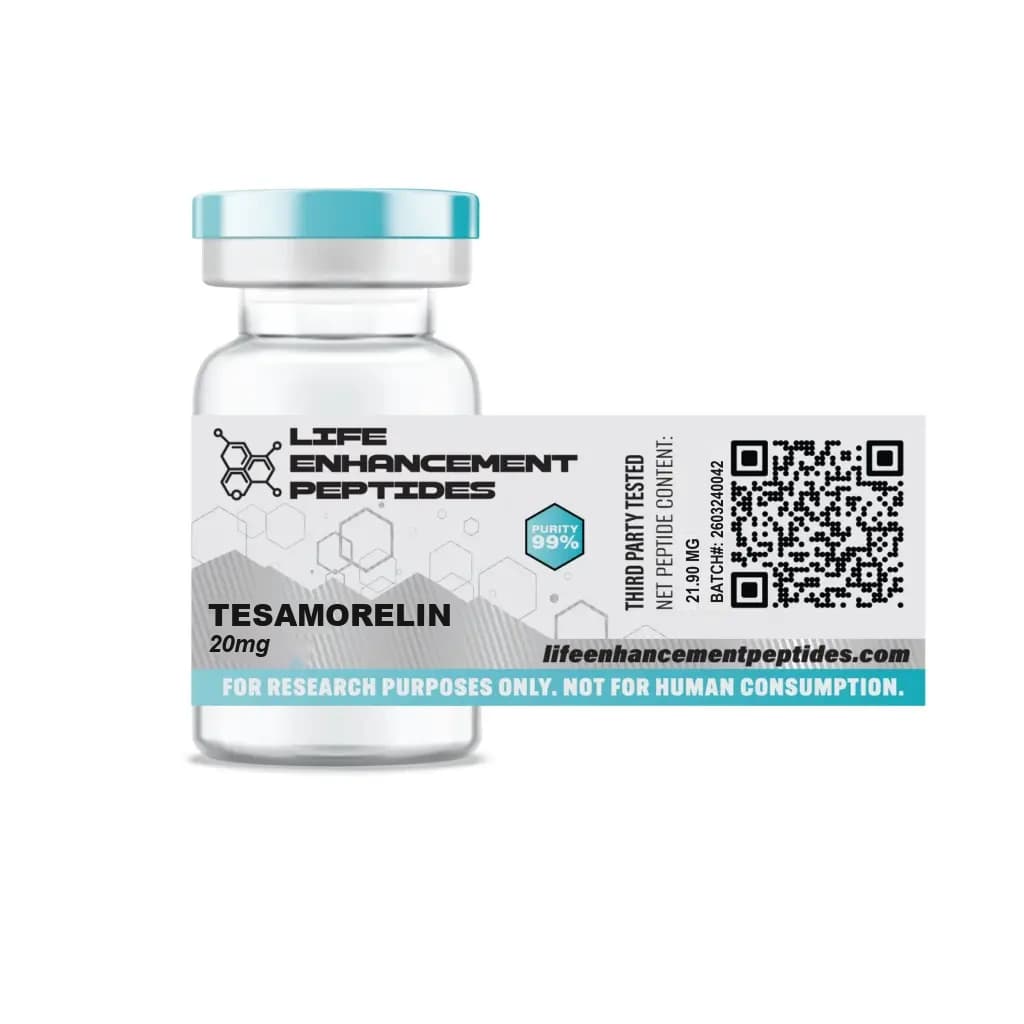
Tesamorelin — 20mg
$110
An FDA-approved synthetic GHRH analog with a trans-3-hexenoyl N-terminal modification for peptidase resistance — the first peptide demonstrated to specifically reduce visceral adipose tissue in human trials, with parallel research in NAFLD and cognitive aging.
 Metabolic Research
Overview
Tesamorelin is a synthetic 44-amino acid analog of growth hormone-releasing hormone (GHRH 1-44) modified at its N-terminus with a trans-3-hexenoyl fatty acid group that protects against dipeptidyl peptidase IV cleavage. The compound was developed by Theratechnologies and approved by the FDA in 2010 as Egrifta for the treatment of HIV-associated lipodystrophy — a condition characterized by excessive visceral (abdominal) adipose tissue accumulation in patients on antiretroviral therapy. This approval established tesamorelin as the first pharmacotherapy with demonstrated visceral-fat-specific reduction in humans.
Mechanistically, tesamorelin binds GHRH receptors on anterior pituitary somatotropes to increase pulsatile growth hormone (GH) release, which in turn elevates IGF-1 and drives lipolysis. The visceral adipose specificity observed in clinical trials — a reduction of approximately 18% in visceral adipose tissue at 26 weeks — reflects the preferential lipolytic effect of GH on deep visceral fat depots over subcutaneous fat. Beyond the primary indication, randomized placebo-controlled trials have demonstrated meaningful reductions in hepatic fat content in HIV-associated NAFLD, with improvements in liver stiffness and biochemical markers of hepatic inflammation.
Beyond body composition, tesamorelin has been investigated in a 20-week randomized trial of older adults with mild cognitive impairment, where GHRH administration produced modest improvements in executive function and verbal memory. Parallel research has examined its role in non-HIV NAFLD, metabolic syndrome-associated visceral adiposity, and as a research tool for studying the GHRH/GH/IGF-1 axis in aging. Its trans-3-hexenoyl modification and 44-amino acid length distinguish it from shorter GHRH fragments like CJC-1295 (30-AA) or sermorelin (29-AA), and the half-life (~30 minutes after subcutaneous injection) supports once-daily dosing in clinical protocols.
Mechanism of Action
Binds GHRH receptors on anterior pituitary somatotropes to drive pulsatile GH release; trans-3-hexenoyl N-terminal modification prevents DPP-IV degradation; GH-mediated lipolysis preferentially affects visceral adipose tissue.
Research Applications
Areas of peer-reviewed scientific inquiry where this compound has appeared.
- Visceral adipose tissue and metabolic syndrome
- HIV-associated lipodystrophy (FDA-approved indication)
- Non-alcoholic fatty liver disease (NAFLD)
- Cognitive function in aging
- GHRH/GH/IGF-1 axis research
- Body composition in age-related somatopause
Key Findings from the Literature
- 01FDA-approved as Egrifta in 2010 — first pharmacotherapy with visceral-fat-specific reduction
- 02~18% reduction in visceral adipose tissue at 26 weeks in pivotal trials
- 03Significant hepatic fat reduction in HIV-associated NAFLD trials
- 04Modest cognitive improvements in older adults with mild cognitive impairment
- 05trans-3-hexenoyl modification extends half-life to ~30 minutes
Certificates of Analysis1
Independent third-party lab reports for this peptide. Each CoA can be verified against its accession number at the testing lab.
1 independent test by Freedom Diagnostics Testing
| Test | Result |
|---|---|
| Purity (HPLC) | 99.231% |
| Identity (MS) | Pass |
| Endotoxins (LAL) | Pass |
Lab: Freedom Diagnostics Testing
Accession: 2603240042
Reports are verifiable against the issuing lab using the accession or batch identifier above.
Related Peptides
Other compounds in the metabolic research category.
 metabolic
Retatrutide
8mg
Eli Lilly's investigational triple receptor agonist targeting GLP-1, GIP, and glucagon receptors simultaneously — demonstrating up to 28.7% weight loss in Phase 3 trials, the highest of any obesity pharmacotherapy to date.
 metabolic
Retatrutide
10mg
The 10mg vial format of retatrutide, Eli Lilly's triple GLP-1/GIP/glucagon receptor agonist, offering greater dosing flexibility for metabolic research protocols targeting weight loss, insulin resistance, and hepatic fat.
 metabolic
Retatrutide
20mg
The bulk research format of retatrutide — Eli Lilly's groundbreaking triple receptor agonist — providing the largest available quantity for high-throughput metabolic studies or extended longitudinal protocols.