
Cognitive & Neurological
Oxytocin — 4mg
$45
A 9-amino acid cyclic neuropeptide synthesized in the hypothalamus — the subject of decades of research in social bonding, maternal behavior, and pair-bonding, and more recently as a candidate modulator of autism spectrum, anxiety, and social cognition disorders.
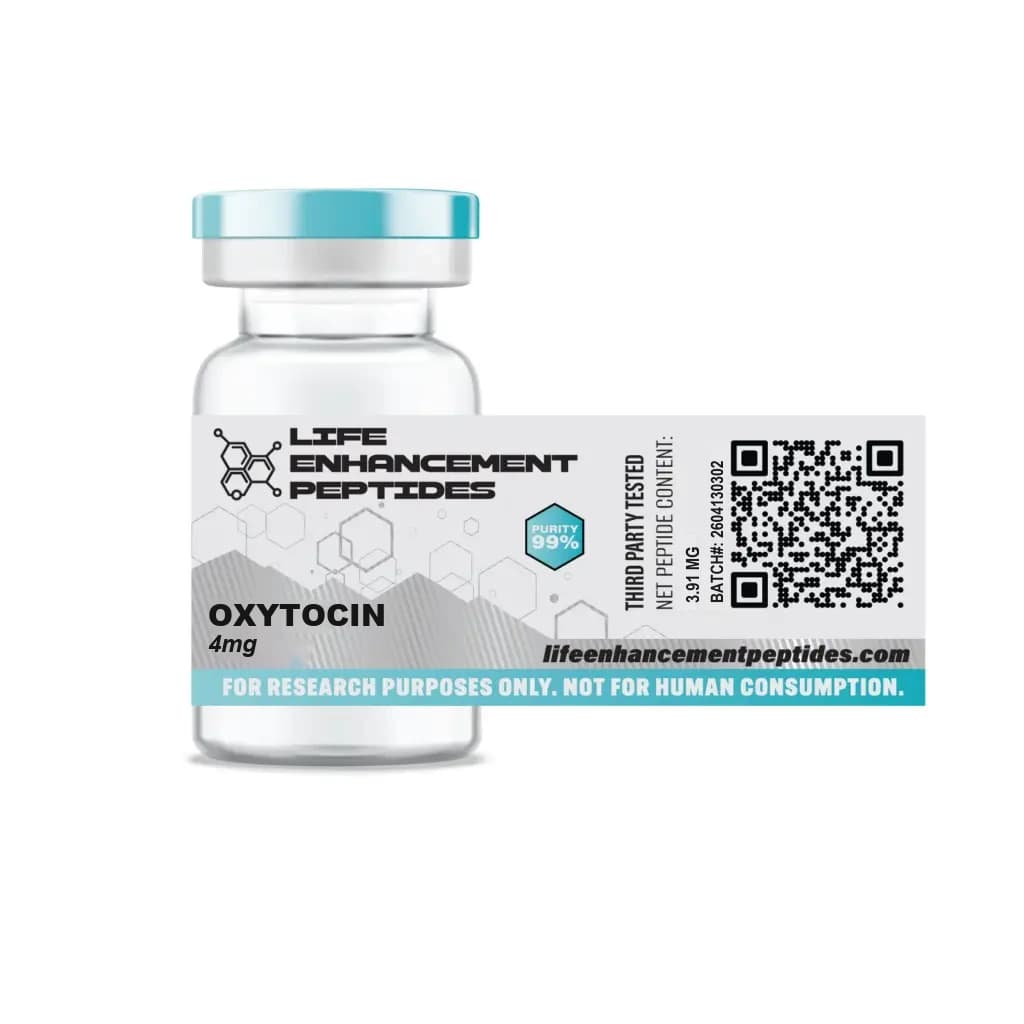 Cognitive & Neurological
Overview
Oxytocin is a 9-amino acid cyclic neuropeptide (Cys-Tyr-Ile-Gln-Asn-Cys-Pro-Leu-Gly, with a disulfide bridge between Cys1 and Cys6) synthesized in the paraventricular and supraoptic nuclei of the hypothalamus and released from the posterior pituitary into systemic circulation. It is evolutionarily ancient, with homologs (vasotocin, mesotocin, isotocin) present across vertebrates, suggesting a deeply conserved role in reproductive and social behavior. Its classical endocrine functions involve uterine contraction during parturition and milk ejection during lactation — roles for which synthetic oxytocin (Pitocin) has long been FDA-approved as a therapeutic agent.
The compound's more recent research profile centers on its central nervous system effects, where it acts as a neuromodulator rather than a classical neurotransmitter. Oxytocinergic projections from hypothalamic nuclei reach the amygdala, nucleus accumbens, prefrontal cortex, and brainstem regions involved in autonomic regulation. Through the oxytocin receptor (OXTR) — a GPCR coupled to Gq/G11 signaling — it influences trust formation, in-group affiliation, parent-infant bonding, pair-bonding in monogamous species, and responses to social threat. Intranasal administration has been the predominant research route for CNS effects, with subcutaneous routes also used in animal protocols.
Research applications include investigations into autism spectrum disorders (where altered oxytocinergic signaling has been implicated), social anxiety, post-traumatic stress disorder, and addiction recovery models. Findings have been heterogeneous — early enthusiasm for oxytocin as a "trust hormone" has been tempered by replication difficulties and context-dependent effects that can range from prosocial to antisocial depending on study design. The peptide has also been studied in cardiovascular research for its effects on atrial natriuretic peptide release and cardiomyocyte function. Its short plasma half-life (approximately 3–5 minutes systemically) necessitates careful pharmacokinetic design in research protocols.
Mechanism of Action
Agonist at the oxytocin receptor (OXTR), a Gq/G11-coupled GPCR; signals through phospholipase C activation and intracellular calcium release; modulates limbic, prefrontal, and brainstem circuits governing social behavior, stress response, and autonomic function.
Research Applications
Areas of peer-reviewed scientific inquiry where this compound has appeared.
- Social cognition and pair-bonding research
- Autism spectrum disorder and social communication
- Anxiety, PTSD, and trauma-related conditions
- Maternal behavior and parent-infant bonding
- Cardiovascular and neuroendocrine research
Key Findings from the Literature
- 01Synthesized in hypothalamic paraventricular and supraoptic nuclei
- 02Cyclic 9-amino acid peptide with Cys1–Cys6 disulfide bridge
- 03FDA-approved for parturition and lactation (as Pitocin)
- 04Central effects mediated through limbic oxytocin receptor (OXTR) signaling
- 05Short plasma half-life (~3–5 min) requires careful research pharmacokinetics
Certificates of Analysis1
Independent third-party lab reports for this peptide. Each CoA can be verified against its accession number at the testing lab.
1 independent test by Freedom Diagnostics Testing
| Test | Result |
|---|---|
| Purity (HPLC) | 99.18% |
| Identity (MS) | Pass |
| Endotoxins (LAL) | Pass |
Lab: Freedom Diagnostics Testing
Accession: 2604130302
Reports are verifiable against the issuing lab using the accession or batch identifier above.
Related Peptides
Other compounds in the cognitive & neurological category.
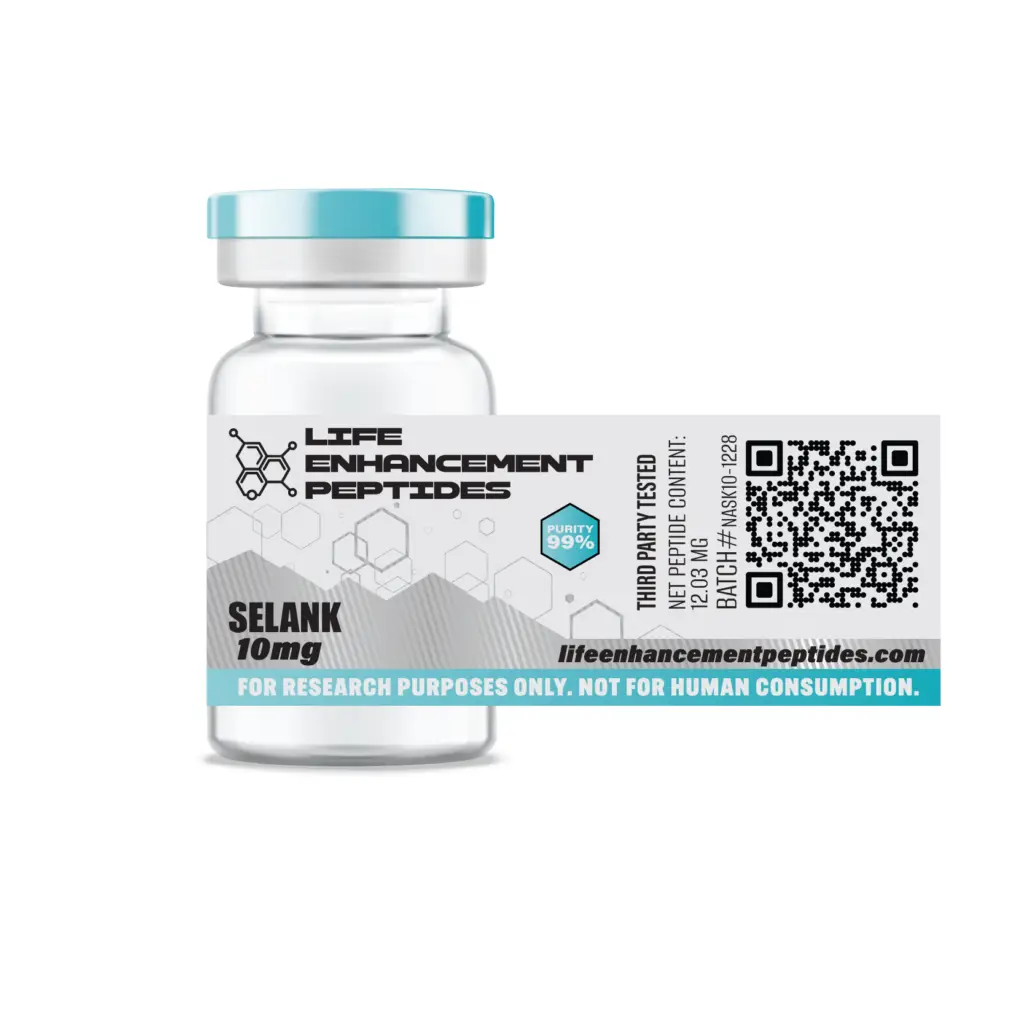 cognitive
Selank
10mg
A synthetic analog of the immunopeptide Tuftsin with anxiolytic potency comparable to benzodiazepines, but without tolerance, dependence, or the cognitive impairment characteristic of classical GABA-A modulators.
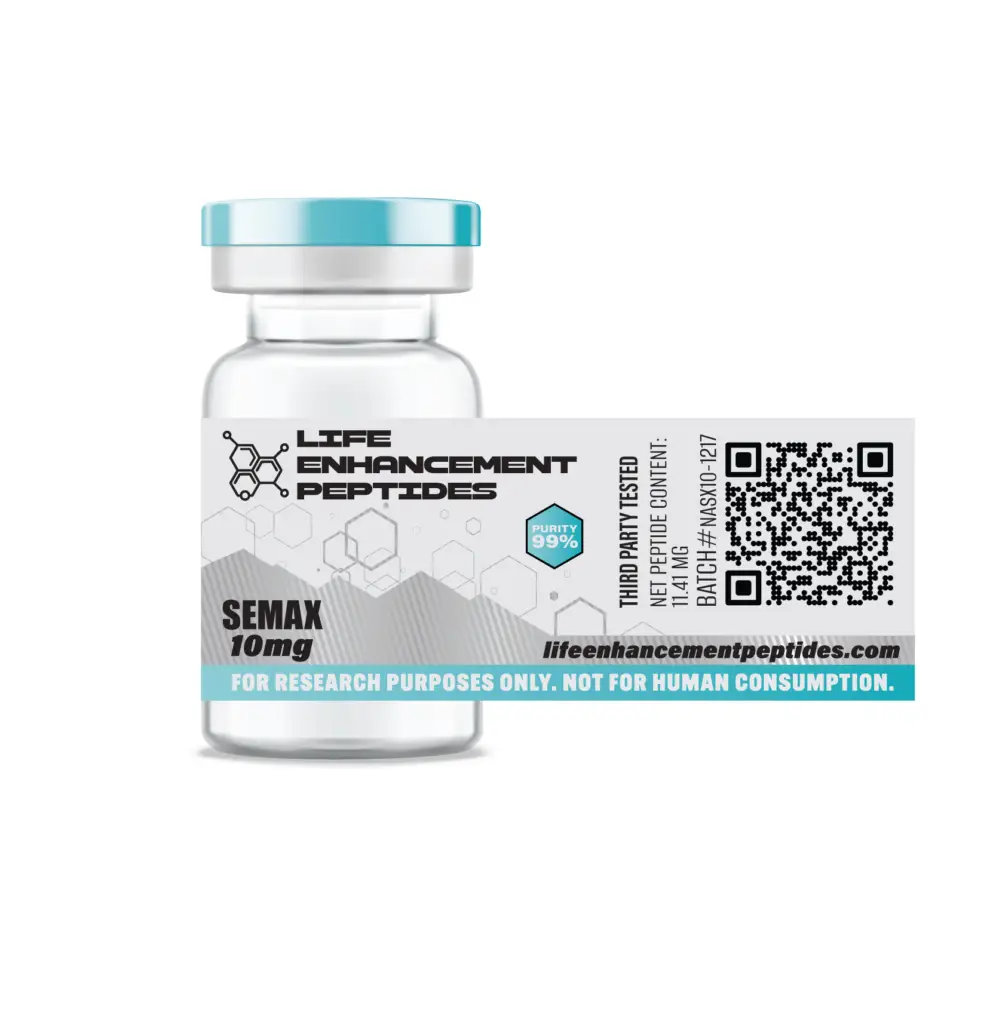 cognitive
Semax
10mg
A synthetic ACTH(4-10) heptapeptide derivative approved in Russia for stroke treatment, with documented improvements in attention and short-term memory and emerging evidence for inhibiting amyloid fiber assembly.
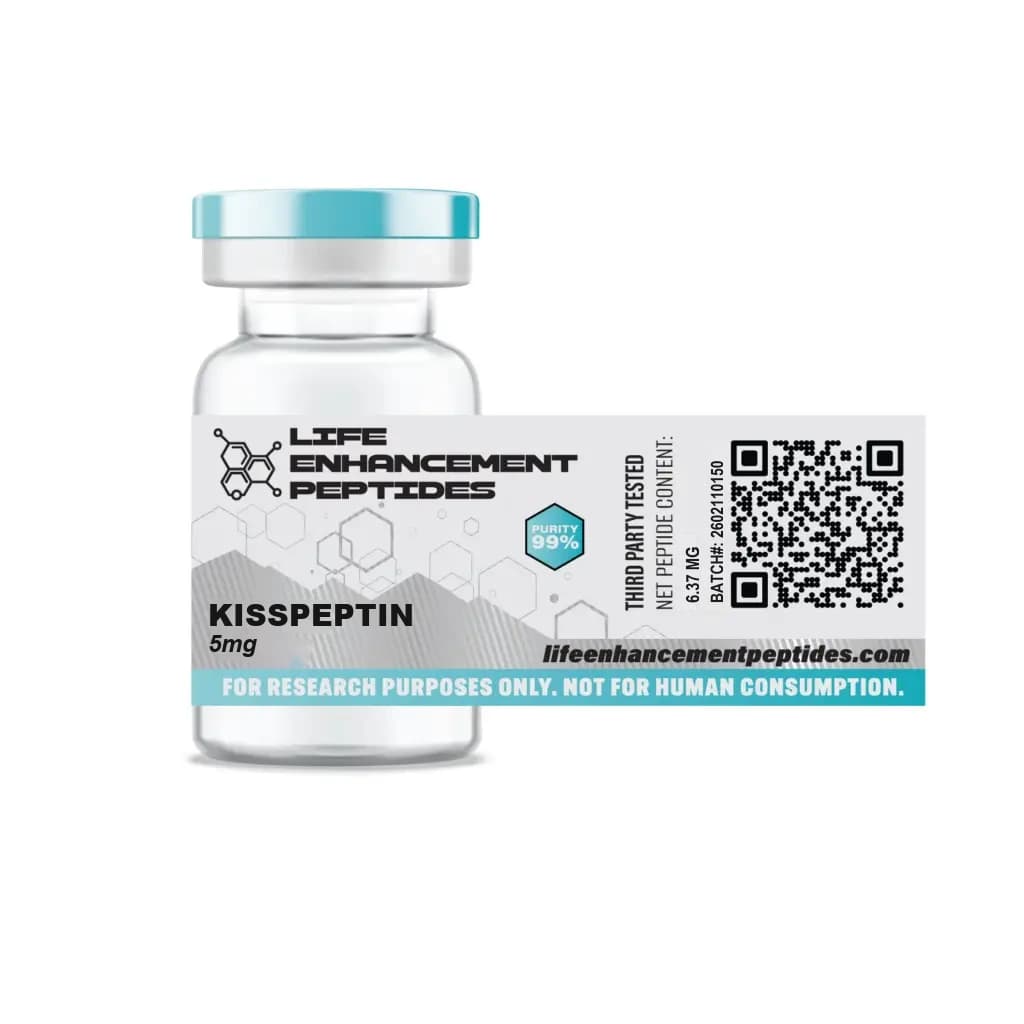 cognitive
Kisspeptin
5mg
The master upstream regulator of GnRH neurons and the hypothalamic-pituitary-gonadal axis, studied as a fertility-restoring compound with emerging applications in hypogonadism and reproductive medicine research.